The Complete Guide to Cross-Platform Mobile Development Services in 2026
-
April 10, 2026

Introduction to Cross-Platform Mobile Development
Cross-platform mobile development enables the creation of applications that can run on multiple operating systems, such as iOS and Android, from a single codebase. This approach leverages various frameworks and technologies like React Native, Flutter, and Xamarin, allowing developers to streamline processes and enhance productivity.
Benefits of Cross-Platform Development
The advantages of cross-platform development are substantial, making it an appealing option for businesses:
- Cost Efficiency: Developing a single application for multiple platforms significantly reduces development costs. Resources can be optimized, directing funds toward other project areas.
- Faster Time to Market: With a unified codebase, updates and new features can be delivered swiftly across platforms. This streamlined workflow allows businesses to respond quickly to market demands.
- Wider Audience Reach: Businesses can engage users on different OS platforms simultaneously. This broader reach ensures potential customers across devices are not neglected.
- Consistent User Experience: Cross-platform tools enable developers to maintain a uniform look and feel across devices. This consistency enhances user satisfaction, leading to better retention.
- Easy Maintenance: Since updates are managed from one codebase, maintaining the application is simplified. Fixing bugs or adding features is more efficient, freeing up resources for innovation.
- Access to Features: Many modern cross-platform frameworks now support native features and functionalities. Businesses can leverage powerful tools like the camera, GPS, and touch ID, providing users with improved app experiences.
“By adopting cross-platform development, businesses are not just cutting costs; they are also enhancing adaptability in an ever-changing technological landscape.”

Utilizing user feedback and adapting applications is crucial for growth. Cross-platform development facilitates this by allowing businesses to test and update their apps quickly based on real user data.
Current Trends
In 2026, the trend towards integrating artificial intelligence and machine learning into cross-platform apps is on the rise. This integration enhances personalization and offers rich, data-driven insights about user behavior, further amplifying the benefits highlighted above.
Cross-platform mobile development services represent a progressive approach to creating applications that are cost-effective, efficient, and user-centric. Businesses looking to leverage the latest technologies in their projects can greatly benefit from partnering with experts in this field, like Ptolemay, who deliver tailored solutions that meet specific business needs.
What is Cross-Platform Mobile Development?
Cross-platform mobile development enables developers to create applications that function on both iOS and Android platforms while maintaining a single codebase. This results in significant time and cost savings for businesses seeking to expand their reach.
Understanding Cross-Platform vs Native Development
Cross-platform development contrasts sharply with native app development. Native apps are built specifically for one platform and utilize platform-specific languages such as Swift or Java. While native apps offer superior performance and user experience, they require separate codebases for each operating system, increasing complexity and expenses.
In terms of key differences:
- Development Time: Cross-platform allows for simultaneous development, often reducing time to market.
- Cost: Lower overall costs due to sharing code across platforms.
- Performance: Native apps typically perform better due to optimization for specific devices.
Choosing between the two ultimately depends on your project requirements and budget considerations.
Key Features of Cross-Platform Apps
Cross-platform mobile applications come packed with features that cater to diverse business needs. These include:
- Efficiency: A single codebase means less maintenance and quicker updates.
- Wide Reach: Cater to a broader audience on both major platforms, maximizing visibility.
- Consistent UI/UX: Maintain a uniform user experience across devices, enhancing brand identity.
- Access to Device Features: Most frameworks provide APIs for utilizing core device functionalities such as camera, GPS, and notifications.
"Cross-platform solutions are perfect for businesses looking to innovate without the heavy investment of native development."
Implementing cross-platform development can streamline your operational processes, delivering high-quality apps without compromising on user experience.
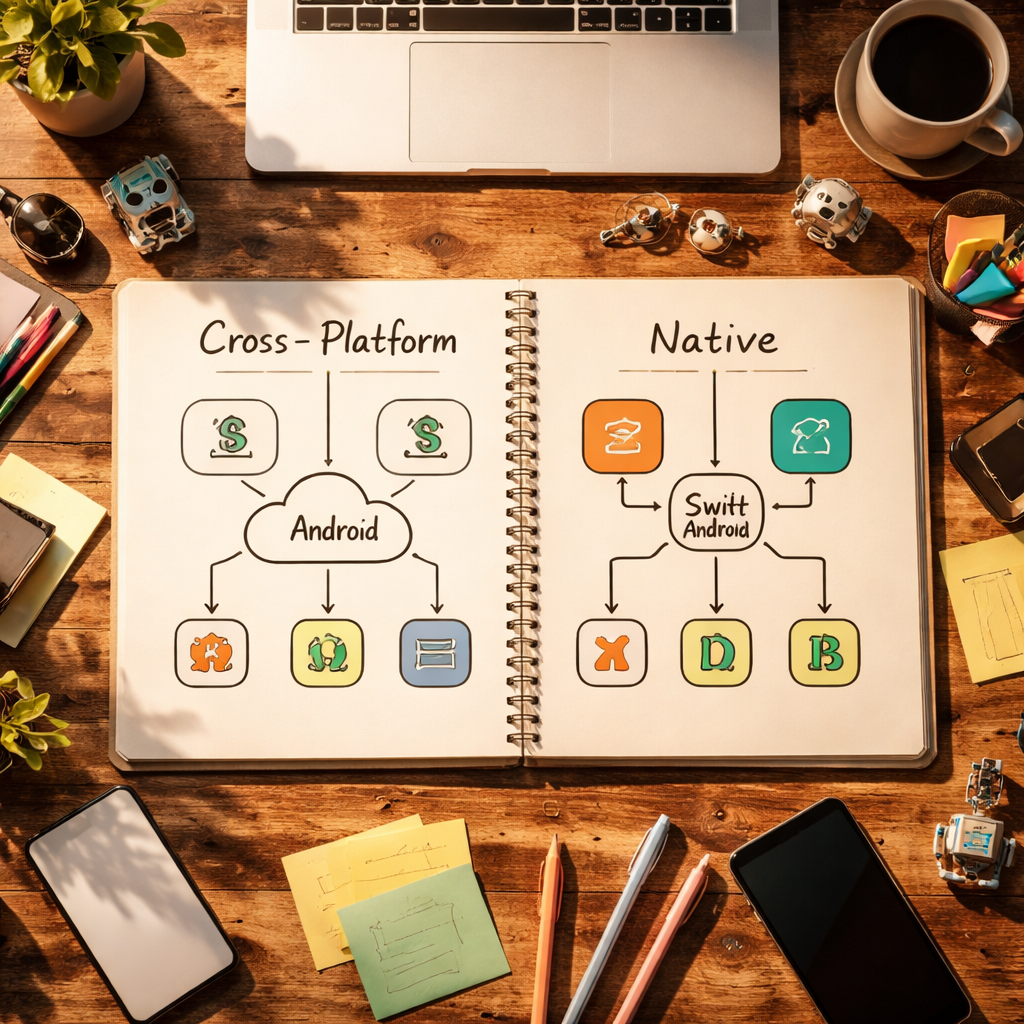
Additionally, advancements in frameworks like Flutter and React Native have enhanced the performance of cross-platform apps. These technologies are designed to optimize speed and responsiveness, which are crucial for user retention in today’s competitive landscape.
For a deeper understanding of cross-platform mobile development, consider exploring resources that showcase real-world applications and success stories.
In summary, cross-platform mobile development is an effective solution for businesses seeking to harness modern technologies without the heavy costs associated with native development. Its robust features and cost efficiency make it a compelling choice in the ever-evolving app development landscape.
Popular Cross-Platform App Development Frameworks
Flutter: Overview and Use Cases
Flutter, developed by Google, allows developers to build natively compiled applications for mobile, web, and desktop from a single codebase. Its rich set of widgets and quick rendering capabilities make it a preferred choice for rapid development.
Use Cases:
- E-commerce apps that require smooth animations.
- Applications needing quick iterations during the design phase.
- High-performance apps with a sleek user interface.

React Native: Pros and Cons
React Native, backed by Facebook, allows developers to create apps using JavaScript and React. It offers a native look and feel across platforms but comes with varying strengths and weaknesses.
Pros:
- Hot reloading feature speeds up development.
- Strong community support and abundant libraries.
- Code sharing between platforms saves time.
Cons:
- Performance may lag for graphics-intensive applications.
- Native modules may be required for complex functionalities, increasing development time.
Xamarin: Strengths and Limitations
Xamarin, a Microsoft product, enables developers to create apps using C#, sharing up to 90% of code across platforms.
Strengths:
- Strong integration with the Microsoft ecosystem.
- Access to native APIs.
- Excellent performance on both iOS and Android.
Limitations:
- Steeper learning curve for those unfamiliar with C#.
- Larger app size compared to other frameworks.
Kotlin Multiplatform: A New Contender
Kotlin Multiplatform represents an evolving approach to cross-platform development, focusing on sharing business logic while using native UI frameworks.
Strengths:
- Allows usage of platform-specific features.
- Code-sharing simplifies maintenance and reduces duplication.
Limitations:
- Still in development, with evolving community resources.
- UI frameworks must be developed separately for iOS and Android.
Comparison of Top Frameworks for Businesses
When evaluating cross-platform frameworks for app development, consider the following factors:
- Development Speed: Flutter and React Native excel in rapid development.
- Performance: Xamarin offers exceptional performance for business-critical apps.
- Community Support: React Native boasts a larger community due to its age and popularity.
Ptolemay provides tailored solutions utilizing these frameworks, ensuring clients receive the right technology for their specific needs. This thoughtful selection process optimizes time-to-market while maintaining application quality.
Utilizing the right framework is crucial for efficient and effective app development. Focus on your specific needs, and consult experts to determine the most suitable technology for your projects.
How to Choose the Right Cross-Platform Development Service
Assessing your business needs and goals is crucial when selecting the right cross-platform development service. Start by identifying your target audience, desired features, and the overall purpose of your application. Having a clear vision allows you to communicate effectively with potential developers.
- Consider what platforms are most relevant for your user base.
- Define the core functionalities that your app must offer.
- Establish a timeline and budget for the project, which can influence your choice of partners.
Evaluating Development Partners
Once you have a clear vision, it’s essential to evaluate potential development partners thoroughly. Look for agencies with a solid track record in cross-platform development. Check their portfolio to assess the quality and diversity of their past projects.
- Expertise in Frameworks: Ensure they are proficient in popular frameworks like Flutter or React Native.
- Client Testimonials: Look for positive feedback from previous clients that highlights their communication and delivery.
- Technical Support: Understand the post-launch support they offer, as ongoing maintenance is critical for app success.
Key Questions to Ask Potential Developers
When engaging with potential developers, asking the right questions can distinguish the best fit for your project. Here are some crucial inquiries to consider:
- Development Process: What methodologies do they use? Agile development often yields better flexibility and responsiveness.
- Team Composition: Who will be working on your project? Knowledge about their team's experience and skills helps ensure they match your needs.
- Customization Options: How will they tailor the app to fit your specific requirements? Discussing customization is vital to avoid generic solutions.
- Analytic Tools: What tools do they utilize for performance analytics? This can significantly impact your app's growth strategy post-launch.
- Timeline and Milestones: What is the expected timeline, and how will they communicate progress? Clear expectations help manage your project effectively.
"Choosing the right development partner can make or break your app's success in a competitive market."
By addressing these considerations, businesses can more effectively navigate the complex landscape of cross-platform mobile development services. A well-planned approach not only saves time and resources but also aligns the project with your overarching business goals.
Cost of Cross-Platform App Development
The cost of cross-platform app development can vary significantly based on several influencing factors. Understanding these factors can help businesses plan their budgets effectively.
Factors Influencing Development Costs
- Complexity of Features: The more complex the features you want in your app, the higher the costs. Advanced functionalities like real-time data processing and personalized user interfaces require more development time and expertise.
- Choose of Framework: Different frameworks have different licensing costs, capabilities, and development speeds. For instance, frameworks like Flutter can speed up development due to their cross-platform capabilities, potentially lowering overall costs.
- Design Requirements: UI/UX design plays a critical role. Custom designs that require research and extensive user testing will elevate the costs compared to using standard templates.
- Developer Expertise: Hiring seasoned developers with specialized skills in cross-platform development might be more expensive initially but could reduce long-term costs through efficient coding and problem-solving.
- Post-Launch Support: Ongoing maintenance, updates, and support plans can add to the initial cost. Consider your need for future enhancements and how this fits into your budget.
Cost Comparison: In-House vs Outsourcing
When assessing costs, businesses often debate whether to use in-house teams or outsource their app development:
In-House Development:
- Pros: Greater control, direct communication, and a better understanding of company culture.
- Cons: Higher overhead costs, including salaries, benefits, and training.
Outsourcing:
- Pros: Access to global talent, often lower costs, and the ability to scale quickly.
- Cons: Potential communication challenges and cultural differences, which could affect project outcomes.
Choosing between in-house and outsourcing is crucial. Often, a hybrid approach combines the strengths of both methods, providing flexibility and cost savings.
Understanding Value vs Price
It's critical to differentiate between value and price in app development.
- Value: The long-term benefits your app can provide, including user engagement, revenue generation, and brand enhancement. A higher upfront cost may lead to more reliable and robust solutions.
"The price of a solution is often outweighed by the value it provides to your business."
In seeking a partner for development, like Ptolemay, focus on quality, long-term vision, and support, rather than merely looking for the lowest bidding option. Investing wisely in your app can yield significant returns in the future.
A thorough understanding of these aspects can greatly assist your business in making informed decisions regarding cross-platform app development. By weighing the costs and potential benefits, you can set realistic budgets and expectations for your project.
Ptolemay's Cross-Platform Development Services
Ptolemay provides comprehensive cross-platform development services that ensure your applications meet modern standards and business needs.
Expertise in Modern Technologies
At Ptolemay, we harness state-of-the-art technologies to deliver robust cross-platform applications. Our expertise includes frameworks like Flutter and React Native, enabling us to create intuitive and high-performing applications for both iOS and Android from a single codebase.
“Staying ahead in app development means embracing the latest technologies.”
This forward-thinking approach ensures that your applications not only function seamlessly across devices but also offer an engaging user experience.
Custom Solutions Tailored to Business Needs
Every business has unique requirements, and at Ptolemay, we prioritize your needs. Our team collaborates closely with your stakeholders to design custom solutions that align with your objectives.
Our development process includes:
- Requirement Analysis: Understanding your business goals and target audience.
- Prototyping: Creating wireframes to visualize the app’s functionality before actual development.
- Iterative Development: Utilizing agile methodologies to refine features based on feedback.
This tailored approach results in applications that not only meet your expectations but also adapt to market changes.
Free Technical Specifications for Your Project
One of the standout services we offer is our free technical specification documentation. This invaluable resource outlines the technical aspects of your project, helping you set clear expectations and requirements.
- Detailed App Specifications: Get insights into technology choices, UI/UX guidelines, and architectural design.
- Project Scope Definition: Clarify the features and functionalities that will be included in your app.
- Cost Estimation: Understand the estimated budget and timelines before beginning development.
This service facilitates better communication between stakeholders and ensures all parties are aligned on project goals.
With Ptolemay as your development partner, you gain access to cutting-edge technologies, personalized solutions, and detailed project specifications—all designed to elevate your app development experience.
Case Studies and Success Stories
Example Projects of Successful Cross-Platform Apps
Several businesses have successfully leveraged cross-platform apps to enhance their market presence. For example, the financial services company Square developed its Square POS app using Flutter. This app allows users to run their business transactions smoothly across various platforms, ensuring a consistent experience whether on mobile or web.
Another notable example is Reflectly, a mental wellness app built on Flutter. Reflectly emphasizes user engagement and personalization, proving that cross-platform apps can offer rich, interactive user experiences. These applications showcase how businesses can efficiently utilize a single codebase to reach broader audiences without compromising functionality.
What Businesses Can Learn from These Examples
The success of these projects highlights several critical insights for businesses considering cross-platform app development:
- Single Codebase Benefits: Maintaining a single codebase reduces development and maintenance costs while ensuring uniformity across platforms.
- User-Centric Design: Prioritizing user experience is crucial. Apps like Reflectly demonstrate the efficacy of personalized interfaces and engaging features, enhancing user retention.
- Rapid Deployment: With frameworks like Flutter, businesses can expedite their app’s time-to-market, keeping pace with competitors and emerging trends.
- Seamless Integration: Cross-platform apps can easily incorporate APIs and third-party services, enabling businesses to expand their functionalities and enhance user engagement.
“In the fast-evolving digital landscape, businesses must remain agile, and cross-platform development offers that flexibility.”
Implementing insights from these case studies allows businesses to mitigate common pitfalls in app development, drive innovation, and maximize their investment. The key takeaway is that effective application design and execution can lead to significant market advantages.
Future Trends in Cross-Platform Development
Emerging technologies are continually reshaping the landscape of mobile application development. As 2026 approaches, several trends are expected to play a pivotal role in cross-platform development.
Emerging Technologies in Mobile Development
The focus on cross-platform solutions is growing, driven by technologies that enhance the development process and user experience.
- Frameworks: Tools like Flutter and React Native are gaining traction. They enable developers to create apps with native performance from a single codebase.
- Cloud Services: Solutions such as AWS Amplify provide backend support, allowing faster deployment and maintenance of applications.
- Progressive Web Apps (PWAs): PWAs are increasingly popular for their ability to function like mobile apps while being accessible through web browsers.
These technologies help businesses save time and resources while reaching wider audiences.
The Role of AI and Machine Learning in Cross-Platform Apps
Artificial intelligence and machine learning are becoming integral to cross-platform app development.
- Personalization: AI algorithms can analyze user behavior, tailoring experiences to individual preferences for improved engagement.
- Automation: Machine learning can automate routine tasks, allowing developers to focus on more complex features and enhancements.
- Predictive Analytics: Utilizing machine learning models, businesses can forecast trends and user needs, thus improving decision-making.
This integration not only improves user experiences but also optimizes development processes.
Predictions for the Next Five Years
Looking ahead, the future of cross-platform development appears promising, driven by several predictions:
- Increased Adoption of AI: Expect more widespread use of AI and ML for smarter applications that adapt to user needs.
- Growth of No-Code Development: No-code platforms will continue to rise, enabling users with limited technical skills to create sophisticated applications.
- Interoperability: Future platforms will enhance interoperability between different applications and devices, creating a seamless user experience.
- Stronger Focus on Security: As data privacy concerns escalate, businesses will need to prioritize security features in their cross-platform solutions.
These trends highlight the rapid evolution of technology, pushing businesses toward innovative solutions that can drive success in a competitive marketplace.
"The digital transformation is not just a choice; it's a necessity for businesses to thrive in today's market."
Conclusion
As we've explored, cross-platform app development offers businesses a unique avenue for growth and innovation. By choosing cross-platform solutions, companies can significantly reduce development time and costs while reaching broader audiences across multiple devices.
Key Takeaways
- Cost Efficiency: Cross-platform development consolidates the need for multiple codebases, ultimately lowering costs.
- Broad Reach: Apps can be deployed on both iOS and Android platforms, increasing market penetration.
- Faster Time-to-Market: Streamlining development allows businesses to launch products quickly, keeping pace with market demands.
"In today’s competitive landscape, businesses must embrace modern technology. Cross-platform app development not only streamlines processes but also enhances user experience."
Several enterprises have already tapped into the benefits of cross-platform applications, leading to greater engagement and scalability. Leveraging these solutions is not merely a trend; it’s a strategic choice that aligns with the evolving technological ecosystem.
Embracing Cross-Platform for Growth
As we look to the future, it’s essential to consider the implications of emerging trends in app development, including:
- AI Integration: Implementing AI-driven features within cross-platform apps can enhance user engagement and personalization.
- Adaptive Interfaces: Ensuring seamless user experiences across devices will remain a priority.
- Increased Security: Industries must prioritize security, positioning businesses that adopt strong protocols ahead of competitors.
As a business looking to grow, leveraging cross-platform solutions can provide the flexibility necessary to adapt in a fast-paced environment. By partnering with experts like Ptolemay, your organization can ensure that it remains at the forefront of innovation while addressing the specific needs of your audience.
Investing in cross-platform technology allows for an agile response to customer demands and market shifts. The advantages are clear: a focus on sustainable growth, reduced development cycles, and enhanced market reach. Embrace this opportunity to redefine your app strategy and thrive in the competitive landscape.
FAQs about Cross-Platform Mobile Development
What is the best cross-platform mobile development framework?
Choosing the best cross-platform mobile development framework depends on your project requirements. However, some of the leading options in 2026 include:
- Flutter: Known for its performance and expressive UI, Flutter offers a rich set of pre-designed widgets.
- React Native: Developed by Facebook, React Native remains popular for its component-based architecture and robust ecosystem.
- Xamarin: Integrated with Microsoft, Xamarin allows developers to use C# and offers a native feel on various platforms.
Each framework has its strengths, so consider factors like team expertise and project goals when selecting one.
Which of the following is a cross-platform mobile app development framework?
From a variety of frameworks available today, here are some that are recognized as cross-platform:
- React Native
- Flutter
- Xamarin
- Ionic
These frameworks facilitate developing apps that work seamlessly across both iOS and Android, driving efficiency and reducing costs. When you evaluate which frameworks to use, look for one that aligns with your team's skills and project timelines.
How long does it typically take to develop a cross-platform app?
The timeline for developing a cross-platform app can vary greatly based on project complexity and the chosen framework. Generally, you can expect:
- Simple Apps: 3 to 6 months
- Moderately Complex Apps: 6 to 12 months
- Highly Complex Apps: Over 12 months
Make sure to account for additional time needed for testing, revisions, and deploying your app in various app stores.
“Efficient workflows in cross-platform development allow companies to significantly cut down production time and resource allocation.”
Choosing a reliable partner for your mobile development needs can streamline the entire process. For businesses looking for custom solutions with modern technologies, Ptolemay stands out as a trusted option. By leveraging diverse frameworks, we can help you navigate the complexities of mobile app development, ensuring your projects align with industry standards and your business objectives.
Meet Our Expert Flutter Development Team
Our full-cycle Flutter development team at Ptolemay specializes in building high-quality, cross-platform apps from start to finish. With expert skills in Dart, backend integrations, and seamless UX across iOS and Android, we handle everything to make your app launch smooth and efficient.






.png)