Web App Development Cost Guide: Insights for 2026
-
January 29, 2026
Wondering how much it will cost to build a web app in 2026 You are not alone. The web app development cost landscape is changing quickly, and many business leaders are searching for clear answers.
Web apps are more essential than ever, with the global market expected to surpass $10 billion by 2027. For organizations of all sizes, understanding web app development cost is crucial for smart budgeting and strategic planning.
This guide will break down every cost factor, project phase, and hidden fee. You will gain actionable insights to optimize your web app development cost and maximize your investment.
Explore sections on cost factors, pricing by complexity, budget breakdowns, unexpected expenses, and proven strategies to boost your ROI. Get ready to plan and invest wisely in your next web app project.
Key Factors Influencing Web App Development Cost
Understanding what drives web app development cost is crucial for any business planning a project in 2026. Multiple factors shape your budget, from the features you choose to the team you hire. Let’s break down each major element so you can approach your investment with confidence.

Project Scope and Feature Complexity
The single biggest driver of web app development cost is project scope. The number of features, their complexity, and the level of customization all play pivotal roles. For instance, a basic app with simple user authentication and dashboards may run between $15,000 and $50,000, while a complex, feature-rich platform like a CRM or e-commerce solution can exceed $120,000.
Seemingly straightforward features, such as user profiles, can require extensive backend work for security and scalability. Integrations with third-party APIs, payment gateways, or custom data sources add further layers of complexity. For example, an e-commerce app demands product catalogs, payment processing, and inventory management, while a CRM platform needs advanced analytics and real-time updates.
Scalability and stringent security requirements can quickly escalate web app development cost. Clear and detailed requirements are essential to prevent scope creep, which is a common cause of budget overruns. For a deeper dive into these drivers, see the key factors affecting app costs.
Technology Stack Choices
The technology stack you select has a profound impact on web app development cost. Choices for frontend frameworks (like React, Angular, or Vue), backend languages (Node.js, Python), and databases (MySQL, MongoDB) all carry different pricing implications.
Opting for off-the-shelf solutions can reduce costs but may limit flexibility. Custom development, while more expensive, allows for tailored functionality and better scalability. Modern frameworks can speed up development if your team has deep expertise.
For example, a WordPress-based app might be delivered for $15,000 to $30,000, whereas a fully custom React/Node.js solution could surpass $50,000. Technology choices also affect long-term costs, such as maintenance and upgrades, which contribute to the total web app development cost over time.
Development Team Location and Structure
Where your team is based and how it’s structured can significantly alter web app development cost. Developer rates vary widely: North America averages $100 to $175 per hour, Western Europe $70 to $150, Eastern Europe $40 to $80, and South/Southeast Asia $20 to $50.
You can choose between in-house teams, freelancers, or agencies. In-house development offers close collaboration but higher fixed costs. Freelancers may be cost-effective for small projects but can present reliability risks. Agencies provide comprehensive services and quality assurance, though at a premium.
Consider this: a 1,000-hour project in the US could cost $100,000, while the same project in Asia might be $25,000. However, differences in communication, time zones, and quality must be balanced against cost savings. Making the right choice here is vital for optimizing web app development cost and ensuring project success.
| Region | Hourly Rate ($) |
|---|---|
| North America | 100–175 |
| Western Europe | 70–150 |
| Eastern Europe | 40–80 |
| South/Southeast Asia | 20–50 |
UI/UX Design and User Experience
Professional UI/UX design is much more than aesthetics—it’s a critical investment in usability and long-term value. Design tasks include wireframes, prototyping, and responsive layouts, which can account for 15 to 20 percent of total web app development cost, or $10,000 to $50,000 for most projects.
Good design drives higher user engagement and lowers support costs by making the app intuitive and efficient. For example, a custom UI for a fintech app will cost more upfront but can deliver substantial ROI through user retention and satisfaction. Conversely, using template-based designs may be cheaper, but often limits differentiation and scalability.
Prioritizing design during the early stages helps smooth development and avoids expensive redesigns later. Investing in UI/UX is an essential part of controlling overall web app development cost.
Post-Release Maintenance and Support
After launch, ongoing support is a critical and often underestimated element of web app development cost. Maintenance includes bug fixes, feature updates, security patches, and server monitoring. Industry data suggests annual maintenance typically runs 20 to 30 percent of the initial build cost in the first year.
Neglecting to invest in maintenance can lead to security vulnerabilities and performance problems, which may cost more to fix down the road. For example, a $100,000 app will likely require $20,000 to $30,000 per year for quality post-release support.
Factoring these ongoing expenses into your budget is essential for protecting your investment and ensuring your web app remains robust and competitive.
Web App Development Cost Breakdown by Project Phase
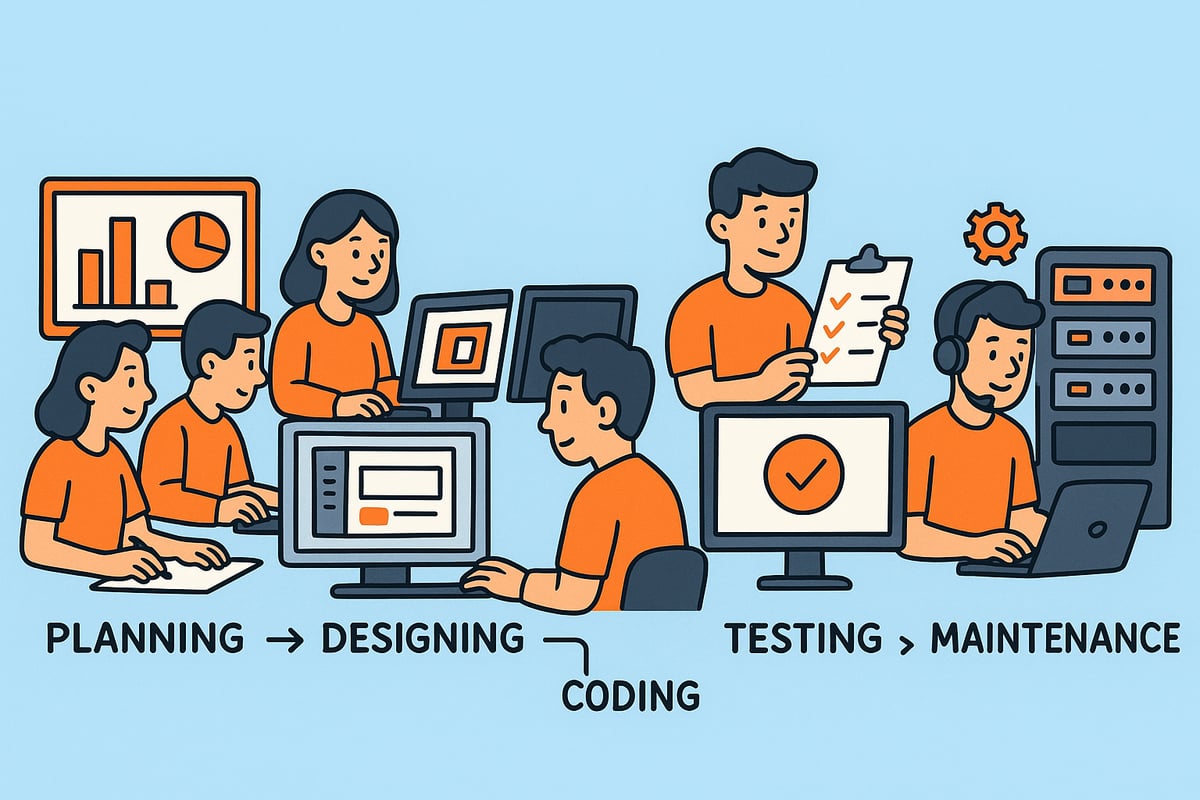
Understanding the web app development cost across each project phase is essential for accurate budgeting and successful delivery. Every step, from planning to ongoing upgrades, carries unique expenses and value. By mapping out these phases, you gain clarity on where your investment goes and how each stage impacts the final product.
Planning and Discovery
The first phase in the web app development cost journey is planning and discovery. This stage covers requirements gathering, user research, technical specifications, and prototyping. Investing in thorough planning, typically 10% to 15% of your total budget ($5,000–$25,000), helps avoid costly changes later.
During discovery, teams clarify goals, define user personas, and establish project scope. This clarity minimizes the risk of scope creep, which can quickly inflate the web app development cost. For example, a well-executed discovery phase often reduces expensive mid-project pivots and lays a strong foundation for all subsequent work.
Design (UI/UX)
Design is the next step that shapes user experience and visual appeal. Professional UI/UX design includes user flows, wireframes, design systems, and device responsiveness. This phase typically absorbs 15% to 20% of the web app development cost, ranging from $10,000 to $50,000.
Effective design not only improves user satisfaction but also streamlines development. Redesigning after coding is far more expensive than getting it right at the start. Investing in custom UI for complex apps, such as fintech or SaaS platforms, yields higher engagement and lower support costs over time.
Development (Frontend, Backend, Integrations)
Development is the most resource-intensive phase, consuming 40% to 50% of the web app development cost. This stage covers core coding, database setup, API integrations, and security implementation, with costs from $20,000 to $250,000 or more.
The complexity of features and chosen tech stack drive this phase’s expenses. For example, adding real-time collaboration or advanced analytics can significantly increase backend costs. Projects with custom integrations or heightened security requirements will also see higher web app development cost at this stage.
Testing and Quality Assurance
Testing and quality assurance ensure your web app meets functional, security, and performance standards. This phase accounts for about 10% to 15% of the total web app development cost, or $5,000 to $50,000.
QA activities include functional testing, performance checks, security audits, and compatibility assessments. Skipping thorough QA can lead to post-launch bugs and expensive fixes. For example, a fintech app with inadequate security testing may face regulatory penalties and damaged reputation.
Deployment and Infrastructure
Deployment and infrastructure involve server setup, deployment automation, performance tuning, and documentation. This phase usually requires 5% to 10% of your web app development cost, with a range of $3,000 to $30,000.
Choosing the right infrastructure is vital for uptime and scalability. Cloud-based deployments for SaaS apps may cost more upfront but support future growth, while basic sites can use shared hosting for less. Proper deployment minimizes downtime and ensures a smooth launch.
Ongoing Maintenance and Upgrades
Ongoing maintenance and upgrades represent a recurring part of your web app development cost. This includes monitoring, bug fixes, feature enhancements, and security updates. In the first year, expect annual maintenance to be 20% to 30% of the initial build, decreasing to 15% to 25% in later years.
Maintenance is essential to address evolving user needs, technology updates, and security threats. Neglecting this phase can result in performance issues and higher emergency costs. For a deeper phase-by-phase review, visit this App development cost breakdown.
Web App Cost Estimates by Complexity & Real-World Examples
Estimating your web app development cost can feel overwhelming, especially with so many variables at play. By breaking down costs by project complexity and showcasing real-world examples, you can better understand what to expect and how to plan your investment. Here is a comprehensive look at typical pricing, timelines, and features for web apps of varying complexity.
Basic Web Apps
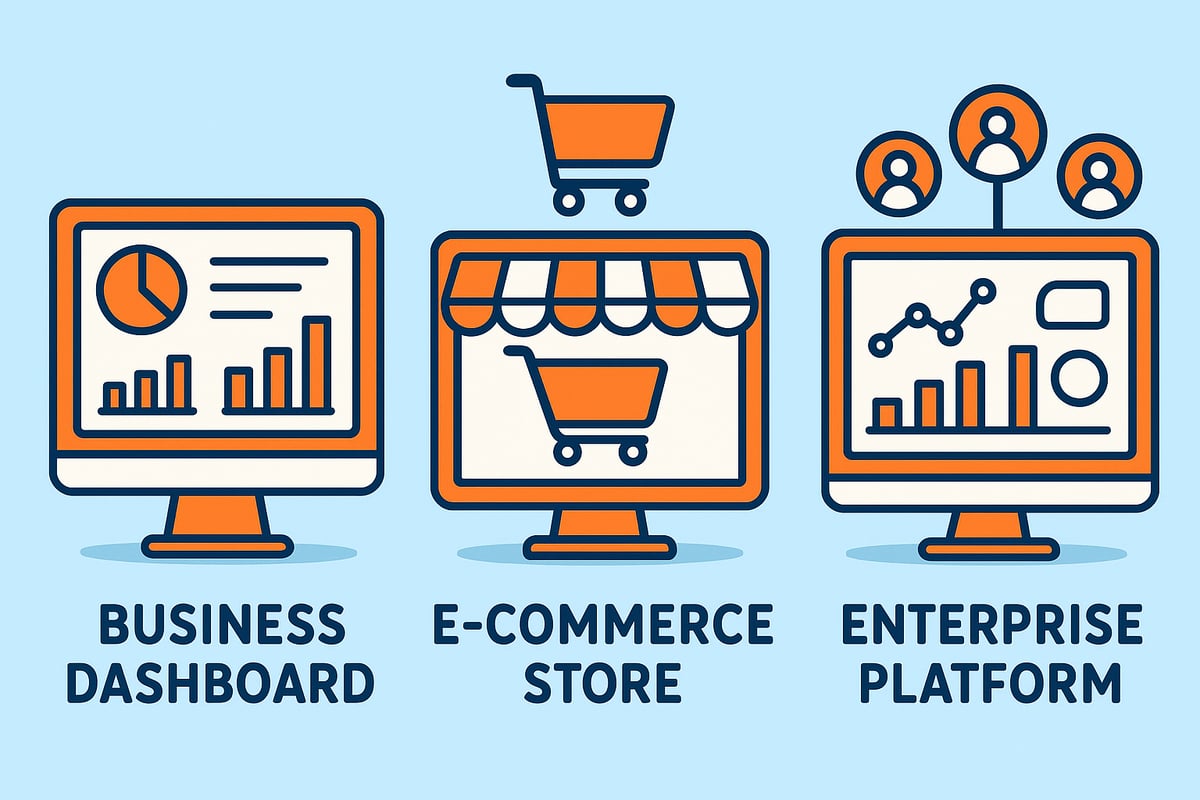
A basic web app is typically the most affordable option for small businesses or startups looking to validate an idea. The web app development cost for this type usually ranges from $15,000 to $50,000.
Common features include:
- Simple content management system (CMS)
- Basic dashboards and reporting
- Standard user authentication
- Data collection forms
For example, an informational site with an admin panel and simple data entry forms falls into this category. Development time is usually 2 to 3 months. These projects work well for MVPs, small business portals, and proof of concept apps.
A clear understanding of your requirements at this stage can help you avoid unnecessary scope creep, keeping your web app development cost within budget.
Medium Complexity Web Apps
Medium complexity web apps offer more advanced features and customization. The web app development cost for this level is typically between $50,000 and $120,000.
Key features often include:
- Custom user roles and permissions
- Advanced search and filtering
- Third-party API integrations (e.g., payments, analytics)
- Built-in analytics dashboards
A good example is an e-commerce platform or booking/reservation system. These projects usually require 3 to 6 months to develop. They are ideal for growing startups, SaaS MVPs, or B2B tools that need more than just the basics.
At this stage, investing in scalable architecture and robust integrations will influence your overall web app development cost and future readiness.
Complex and Enterprise Web Apps
Complex and enterprise web apps are designed for organizations with advanced requirements. The web app development cost here starts at $120,000 and can exceed $500,000, depending on scope.
Features may include:
- Real-time collaboration tools
- Complex databases and data structures
- Advanced analytics and reporting
- Machine learning modules
- Multi-language and multi-region support
For example, CRM systems, social networks, and fintech platforms fall into this category. Development timelines range from 6 to 12+ months. These apps suit enterprises, regulated industries, or platforms expecting high traffic.
Security, compliance, and scalability are critical cost drivers at this level, making the web app development cost a strategic investment.
Cost Comparison Table
To help visualize the differences, here is a side-by-side comparison of web app development cost, maintenance, and timelines:
| App Type | Development Cost | Maintenance (Year 1) | Timeline |
|---|---|---|---|
| Basic | $15,000–$50,000 | $3,000–$15,000 | 2–3 months |
| Medium | $50,000–$120,000 | $10,000–$36,000 | 3–6 months |
| Complex | $120,000–$500,000+ | $24,000–$150,000+ | 6–12+ months |
As you can see, maintenance scales with the initial web app development cost, and timelines increase with complexity. For a deeper dive into cost breakdowns by app type, check out this Web Application Development Cost Factors resource.
Hosting & Infrastructure Costs
Beyond development, hosting and infrastructure are essential factors in your total web app development cost. Basic hosting services typically range from $50 to $200 per month for shared or entry-level cloud hosting.
Mid-tier options, such as dedicated servers or scalable cloud platforms, cost $200 to $1,000 per month. Enterprise-grade solutions with high availability and global content delivery networks can exceed $1,000 to $3,000 monthly.
Other expenses to consider:
- SSL certificates: $0–$300 per year
- Domain registration: $10–$50 per year
- CDN services: $0–$1,000+ per month
For instance, a SaaS app hosted on AWS with a global user base will have higher infrastructure costs as it scales. Factoring these ongoing expenses into your web app development cost planning ensures you are prepared for growth.
Hidden and Ongoing Costs in Web App Development
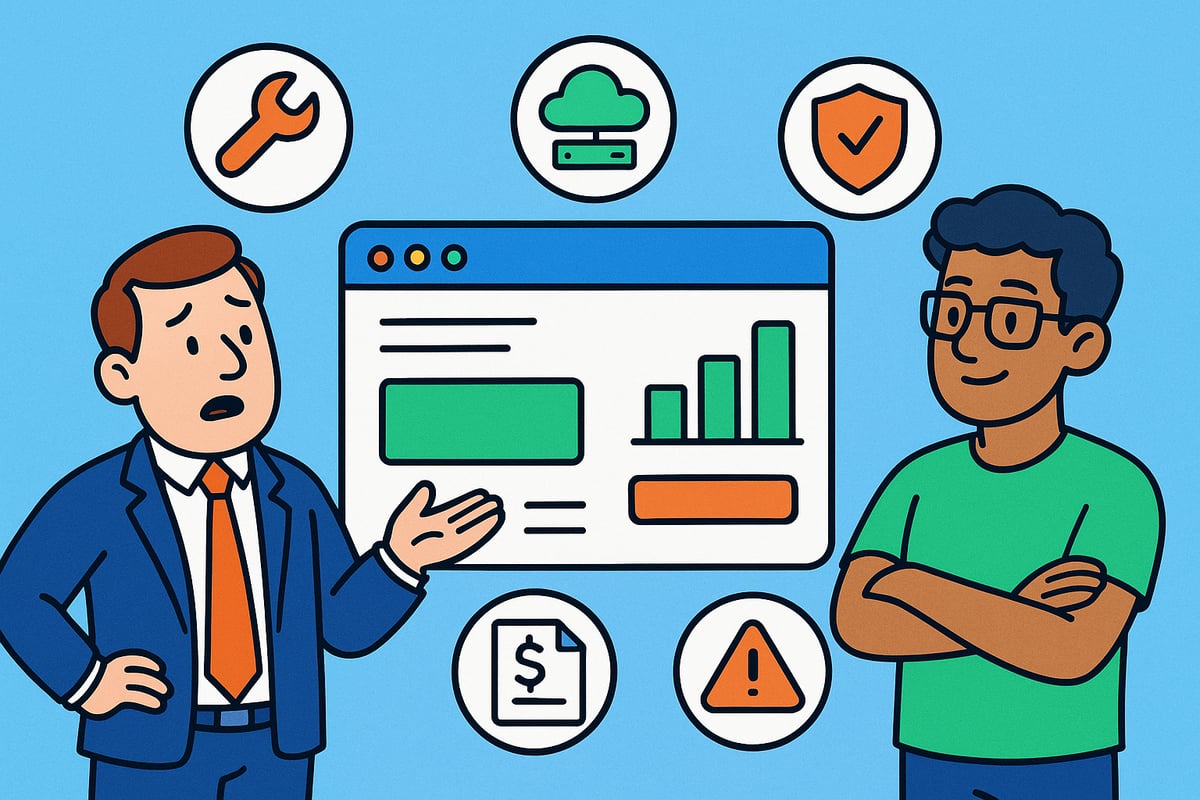
When budgeting for a web app, many teams focus only on initial build costs. However, the reality is that hidden and ongoing expenses can significantly impact your total web app development cost over time. Understanding these factors is essential for accurate planning and long-term success.
Maintenance and Support
Ongoing maintenance is a significant component of web app development cost. Regular updates, bug fixes, server monitoring, and performance optimization are necessary to keep your app secure and efficient. Industry data shows that maintenance often accounts for 20 to 30 percent of the initial build cost in the first year.
For example, if your initial investment was $100,000, expect to allocate $20,000 to $30,000 annually for maintenance. Neglecting this can lead to security vulnerabilities, degraded performance, or even downtime. For a detailed breakdown, see Application maintenance and support costs.
Third-Party Services and Integrations
Modern web apps rely on various third-party services, which add to your web app development cost. These include payment gateways like Stripe, analytics tools such as Google Analytics, cloud storage, and email or SMS platforms.
Each integration typically involves both setup fees and recurring monthly charges. For instance, cloud hosting or payment processing may cost anywhere from $10 to several hundred dollars per month, depending on transaction volume and user activity.
Infrastructure Scaling and Upgrades
As your user base grows, infrastructure requirements expand. This means higher costs for bandwidth, storage, and compute power. A sudden spike in users, such as from a viral marketing campaign, can quickly increase your AWS or Google Cloud bills.
Proactive scaling is essential to avoid outages but comes with increased operational expenses. The web app development cost must account for these potential surges to prevent surprises down the road.
Compliance and Security
Compliance with regulations like GDPR, HIPAA, or PCI DSS is non-negotiable for many industries. Achieving and maintaining compliance involves regular audits, security upgrades, and documentation, all of which add to your web app development cost.
For example, a healthcare app may need annual security audits and ongoing encryption upgrades, resulting in recurring costs that cannot be overlooked.
Content Management and Updates
Keeping your web app content fresh is crucial for user engagement and SEO. This includes updating product catalogs, publishing blog posts, and optimizing for search engines. These activities create ongoing costs, both in terms of time and budget, and should be factored into your web app development cost.
E-commerce platforms, for instance, often require frequent updates to product listings, images, and promotions, which can add up over time.
Unexpected Expenses
No matter how well you plan, unforeseen costs can arise. Emergency bug fixes, urgent feature requests, or regulatory changes can all require immediate attention and resources.
A change in data privacy laws may force rapid compliance work, while a critical bug could demand an urgent patch. Building a contingency fund into your web app development cost helps manage these surprises.
Opportunity Cost of Downtime
Downtime can have a direct financial impact. Lost sales, damaged reputation, and decreased user trust all result from outages or breaches. For e-commerce platforms, even a short period of downtime during peak sales can lead to significant revenue loss.
Investing in robust infrastructure and proactive monitoring reduces this risk, but the potential cost of downtime should always be included in your overall web app development cost planning.
Strategies to Optimize Web App Development Cost in 2026
Building a successful web app in 2026 requires more than just a great idea. To manage web app development cost effectively, you need strategies that address planning, technology, and long-term sustainability. Let’s explore proven ways to maximize your budget while ensuring your project delivers value.
Prioritize Features and Start with MVP
One of the most effective ways to control web app development cost is by focusing on an MVP, or minimum viable product. Start by identifying core features essential for your users and business goals.
By launching with only the necessary functionality, you reduce initial expenses and validate your concept before committing to a full-scale build. This approach allows you to gather real feedback, adapt quickly, and minimize the risk of investing in features that may not deliver value.
- List essential features only
- Postpone advanced or “nice-to-have” items
- Iterate based on user feedback
A well-scoped MVP keeps your web app development cost predictable and manageable.
Choose the Right Development Partner
Selecting a development partner with the right expertise can significantly impact your web app development cost. Evaluate agencies or freelancers based on their portfolio, technical skills, and communication processes.
A transparent partner will provide clear estimates, realistic timelines, and detailed contracts. Look for teams experienced with projects similar to yours, as this helps avoid costly mistakes and ensures smoother delivery.
- Prior experience with your industry
- Strong client references
- Open communication and regular updates
A trustworthy partner helps you avoid surprises and future budget overruns.
Leverage Modern Frameworks and Tools
Utilizing proven frameworks and cloud-based tools can optimize your web app development cost. Modern technologies like React, Node.js, or Firebase accelerate development and offer scalability out of the box.
When your team is proficient with these frameworks, you benefit from faster turnaround, fewer bugs, and easier maintenance. Cloud services like AWS or Google Cloud also provide flexible infrastructure that grows with your application needs.
- Use reusable components and libraries
- Automate deployments and testing
- Choose scalable backend solutions
Smart technology choices today reduce ongoing expenses and support future growth.
Plan for Maintenance from Day One
Ignoring post-launch needs is a common reason web app development cost spirals over time. From the start, allocate resources for ongoing maintenance, including bug fixes, security updates, and feature enhancements.
By budgeting for support, you prevent emergencies that can lead to expensive downtime or rushed fixes. Regular updates keep your app secure and responsive to evolving user needs.
- Schedule periodic reviews and updates
- Monitor server performance and uptime
- Address security vulnerabilities proactively
A proactive approach to maintenance protects your investment and ensures long-term stability.
Optimize Infrastructure Spend
Cloud computing offers flexibility, but unchecked resource use can inflate your web app development cost. Begin with a scalable infrastructure that matches your current needs, then monitor usage to prevent overspending.
Implement autoscaling and set alerts for unexpected spikes. Regularly review your hosting, database, and CDN expenses to identify savings opportunities.
| Infrastructure Tier | Typical Monthly Cost | Best For |
|---|---|---|
| Shared Hosting | $50–$200 | Small MVPs, low traffic |
| Scalable Cloud (AWS) | $200–$1,000 | Startups, growing apps |
| Enterprise Cloud/CDN | $1,000–$3,000+ | High-traffic, global reach |
Right-sizing your infrastructure reduces waste and optimizes your web app development cost.
Invest in Quality Assurance Early
Testing is not the place to cut corners if you want to control web app development cost. Early investment in QA ensures bugs and vulnerabilities are caught before launch, saving significant time and money.
Automated testing, code reviews, and security audits should be part of your workflow from the start. This reduces the risk of expensive post-launch fixes and protects your reputation.
- Implement automated test suites
- Conduct thorough code reviews
- Include security checks in every release
Consistent QA practices help keep your web app development cost within budget.
Cost Transparency and Regular Reviews
Maintaining visibility into your project’s progress and spending is crucial for optimizing web app development cost. Use project management tools to track milestones, deliverables, and budget consumption.
Schedule regular reviews with your development team to catch overruns early and adjust scope as needed. Clear reporting and communication empower you to make informed decisions and prevent scope creep.
For more actionable strategies, explore these best practices for reducing costs, which provide additional insights into cost optimization throughout your web app journey.
Article written using RankPill.
Meet Our Expert Flutter Development Team
Our full-cycle Flutter development team at Ptolemay specializes in building high-quality, cross-platform apps from start to finish. With expert skills in Dart, backend integrations, and seamless UX across iOS and Android, we handle everything to make your app launch smooth and efficient.






.png)